Executive Summary: The Contrarian Thesis
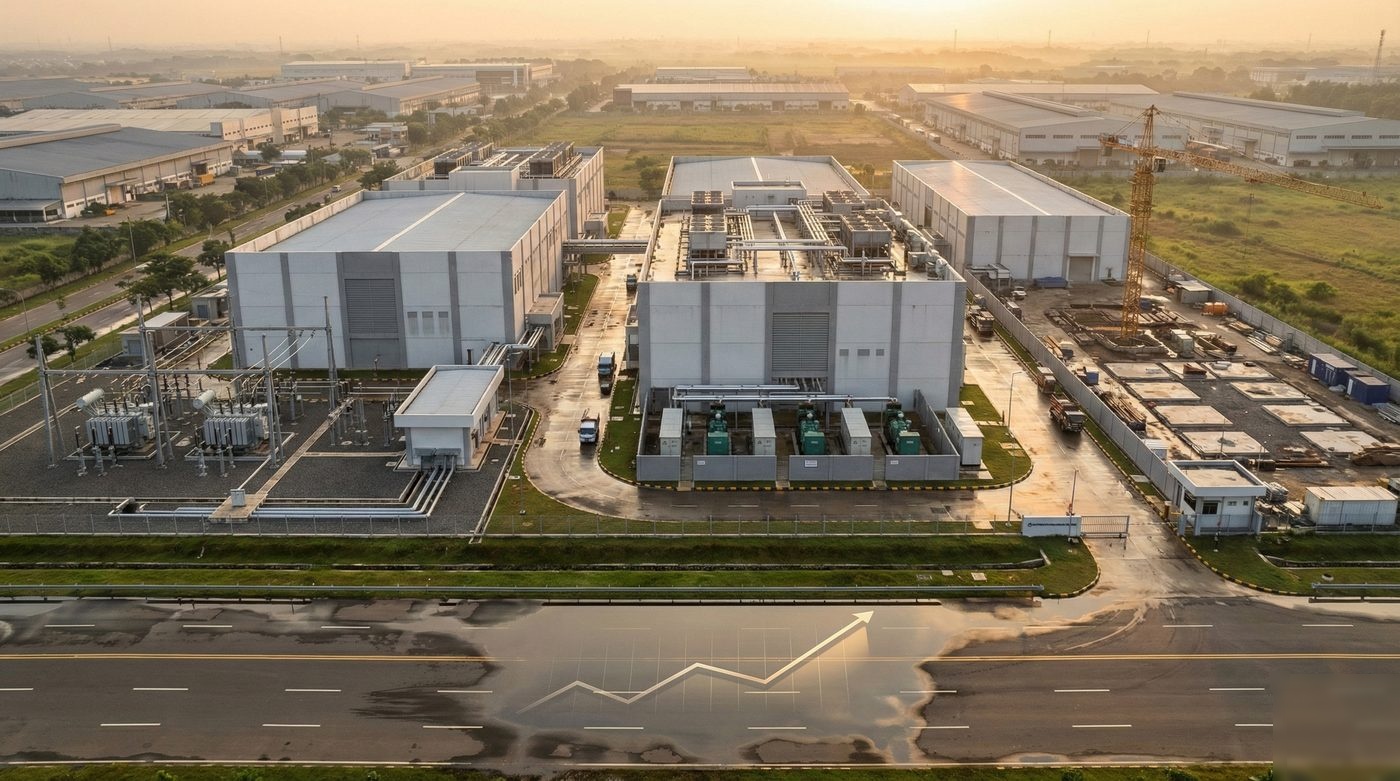
In our companion analysis, we examined the bear case for Southeast Asia's data center boom. This article tests the 180-degree counterargument: structural demand may grow faster than recent absorption rates suggest. The "bubble" narrative fundamentally miscounts demand. It ignores Jevons Paradox (AI efficiency = more demand, not less). It underweights sovereign AI mandates across 6 nations. It dismisses a $1 trillion digital economy growing at 19% annually. And it treats $602B in hyperscaler capex as irrational exuberance without weighing operators' competitive reasons for investing. That is the bull case; it still depends on demand arriving in time to use the planned capacity.
Bear Case Recap
Article 16 argued: 6,068 MW pipeline, Johor's 5.8 GW for 3.8M people, speculative builds, bullwhip effect, potential 2027-2029 correction. These risks remain relevant. The counterargument turns on whether new demand sources change the rate of capacity absorption.
Table of Contents
1. Why the "Bubble" Narrative Is Fundamentally Wrong
The bear case for Southeast Asia's data center market — presented in detail in our companion bubble risk analysis — rests on a simple premise: supply is growing faster than demand. The math looks obvious — 6,068 MW of pipeline against current absorption rates projects years of oversupply.
But this analysis contains a fatal flaw: it extrapolates future demand from past absorption rates. It's like forecasting smartphone demand in 2010 based on flip-phone sales data. The demand drivers for SEA data centers in 2026-2030 are fundamentally different from anything the region has experienced.
Here's what the bear case misses:
The bears are counting known demand against known supply. But the demand they're counting represents perhaps 30-40% of actual demand by 2030. They're measuring the visible tip of an iceberg and declaring the ocean shallow.
2. Jevons Paradox: Why AI Efficiency Means MORE Demand, Not Less
The single most powerful argument against the bubble narrative is Jevons Paradox — and almost nobody in the data center industry is talking about it correctly.
In 1865, economist William Stanley Jevons observed that improvements in steam engine efficiency didn't reduce coal consumption. Instead, by making steam power cheaper and more accessible, efficiency improvements dramatically increased total coal demand. The same principle has held for every major technology: more efficient cars led to more driving, more efficient computing led to more computing, cheaper data storage led to more data.
2.1 DeepSeek: The Proof Point Everyone Misread
When DeepSeek published that they trained a competitive AI model for allegedly $5.6 million instead of $100M+, the bear case celebrated: "See? AI doesn't need as much infrastructure as we thought!"
They had it exactly backwards.
What actually happened after DeepSeek: Meta CEO Mark Zuckerberg immediately raised 2025 AI spending to $60-65 billion, declaring that "scaling up infrastructure remains a long-term advantage." Microsoft maintained its $80B capex plan. Amazon doubled down to $200B for 2026. Why? Because cheaper AI training means more people will train more models for more use cases. The market didn't contract — it expanded.
2.2 The Inference Multiplier
Training gets the headlines. Inference is where the demand lives. Deloitte projects AI inference will account for two-thirds of all AI compute in 2026 (up from half in 2025) and 75% by 2030. Inference workloads are growing at 35% CAGR, projected to reach more than 90 GW globally by 2030.
Here's the Jevons math for inference:
| Factor | Effect on Per-Query Cost | Effect on Total Demand | Net Impact on DC Capacity |
|---|---|---|---|
| Model efficiency (DeepSeek-style) | -80% per query | +500% more queries | NET INCREASE |
| Hardware improvement (H200 vs H100) | -50% per query | +200% more users | NET INCREASE |
| Quantization & distillation | -60% per query | Edge/mobile adoption | NEW DEMAND |
| Combined Jevons Effect | -90% per unit | +1,000% total volume | MASSIVE INCREASE |
Illustrative based on historical Jevons patterns in computing (Moore's Law era saw similar dynamics). Sources: Deloitte TMT Predictions 2026, SIGARCH research. For educational and research purposes only.
"Making each training run cheaper increases total usage, and demand for GPUs and data center capacity doesn't disappear — it grows. The rebound effect can exceed 100%, meaning efficiency improvements result in faster resource consumption." — SIGARCH, IEEE Computer Society
The Jevons conclusion: Every efficiency improvement the bears cite as evidence against DC demand is actually evidence FOR it. DeepSeek didn't kill the infrastructure thesis. It supercharged it. When AI becomes 10x cheaper to run, it doesn't get used 10x less — it gets used 100x more.
3. The $1 Trillion Engine: SEA's Digital Economy Is Just Getting Started
Bear-case analyses fixate on hyperscaler demand. But hyperscalers are only half the story. The domestic digital economy of Southeast Asia is the demand driver that almost every pipeline analysis ignores.
3.1 The 700 Million Digital Consumers
Southeast Asia has 700 million people, with a median age of 30 and internet penetration approaching 75%. This is the world's youngest, most digitally-native large population after India. E-commerce GMV is projected to reach $234 billion by 2025 and keep compounding. Every transaction, every food delivery, every fintech payment, every streaming session requires compute.
Indonesia alone has 280 million people with a digital economy projected to reach $360 billion by 2030. President Jokowi explicitly targeted a digital economy contribution of Rp 5,800 trillion (USD ~$360B) by 2030. Every rupiah of that economy requires local data processing infrastructure.
3.2 The Enterprise Cloud Migration Wave
SEA enterprise cloud adoption is still in early innings. While US enterprise workloads are 60-70% cloud-native, SEA enterprises are at an estimated 25-35%. The migration wave hasn't peaked — it hasn't even started for many sectors:
- Banking: Indonesia's 110+ banks are still migrating core systems. OJK regulations now mandate local data processing.
- Government: Indonesia's SPBE (Government Digital System) is pushing all ministries toward cloud-based infrastructure by 2028.
- Healthcare: Post-COVID digitization across SEA creating massive new data streams.
- Manufacturing: Industry 4.0 adoption in Thailand, Vietnam, Malaysia generating IoT/edge compute demand.
Key insight: Bear-case pipeline analyses count hyperscaler pre-commitments and carrier-neutral spec builds. They don't count the domestic enterprise migration wave that will fill an estimated 30-40% of the pipeline through organic cloud adoption. This is the demand that doesn't show up in LOIs and pre-lease agreements — but it's the demand that makes or breaks occupancy rates.
4. Sovereign AI: The Demand Nobody's Counting
Perhaps the most consequential demand driver for SEA data centers isn't commercial at all — it's political. Across the region, governments are racing to establish sovereign AI capabilities, and every sovereign AI initiative requires local data center infrastructure.
| Country | Sovereign AI Initiative | Investment | DC Demand Impact |
|---|---|---|---|
| Indonesia | National AI Roadmap + Sovereign DC | $140B GDP target by 2030 | 500+ MW new sovereign demand |
| Malaysia | RM 2B Sovereign AI Cloud | ~$490M + 3,000 GPUs by 2026 | 200+ MW dedicated |
| Singapore | National AI Strategy 2.0 | $1B+ (NAIS 2.0) | Overflow to Johor/Batam |
| Vietnam | Digital Economy Master Plan | $3.5B DC investment pipeline | 300+ MW by 2030 |
| Thailand | National Cloud First + AI Strategy | $5B+ committed investments | 400+ MW EEC corridor |
| Philippines | National AI Roadmap 2.0 | Emerging | 100+ MW Manila region |
Sources: Indonesia National AI Roadmap, Malaysia PM Office, NAIS 2.0 Singapore, EEC Thailand. Note: Sovereign demand is in addition to commercial pipeline. For educational and research purposes only.
4.1 Data Sovereignty Laws: The Non-Discretionary Demand
This isn't speculative demand. It's legally mandated demand. Indonesia, Vietnam, Malaysia, and Thailand have all tightened data sovereignty laws requiring local data storage for finance, government, healthcare, and critical infrastructure. This creates a floor of demand that exists regardless of hyperscaler capex cycles:
- Indonesia's GR 71/2019: All public electronic systems must use local data centers. This alone drives hundreds of MW of demand.
- Vietnam's Decree 13/2023: Cross-border data transfers require local copies. Every international company operating in Vietnam needs local DC capacity.
- Malaysia's PDPA amendments: Strengthened localization requirements for financial and government data.
- ASEAN DEFA: The Digital Economy Framework Agreement, if implemented, could double the digital economy to $2T — while still requiring member-state data processing.
The sovereign demand floor: Conservative estimates put sovereign + data-sovereignty-driven demand at 1,500-2,000 MW across SEA by 2030. This demand is invisible in commercial pipeline analyses but it's the most reliable demand in the market — because it's backed by law, not by commercial contracts.
5. Every Great Infrastructure "Bubble" Wasn't: The Historical Evidence
The bears love to invoke the 2001 telecom crash as a warning. Let's use it — but let's tell the complete story.
5.1 The Critical Difference: Revenue vs. Projections
The 2001 telecom crash happened because companies were building for projected demand based on extrapolated internet growth curves. The revenue wasn't there yet. SEA's 2026 DC build-out is different in one crucial way:
| Metric | Telecom 2001 | SEA DC 2026 | Signal |
|---|---|---|---|
| Revenue backing investment | Projected, unproven | DC-IDX-1: +119% YoY, 54% margins | POSITIVE |
| Anchor tenant contracts | Minimal, speculative | 60-70% pre-committed to hyperscalers | POSITIVE |
| Demand driver maturity | Internet barely commercialized | AI generating $200B+ enterprise revenue | POSITIVE |
| Regulatory tailwinds | Deregulation (reduced barriers) | Data sovereignty REQUIRING local DCs | POSITIVE |
| Population digitization | ~5% internet penetration globally | 75% in SEA, 700M users | POSITIVE |
| Utilization of existing capacity | 3-5% fiber utilization | Singapore 98%, SEA avg 86%+ | POSITIVE |
The 2001 telecom analogy breaks down on every meaningful metric. The demand is real, contracted, and growing. For educational and research purposes only.
5.2 Northern Virginia: The Prophecy That Came True
In 2010-2012, Northern Virginia (NoVA) was called a "data center bubble." Ashburn alone had a pipeline that industry analysts said would take a decade to fill. Vacancy rose to 20%+ in some complexes. Critics said the same things about NoVA that they're saying about Johor today: "Too much capacity, too fast, for a market that can't absorb it."
Today, Ashburn hosts 2,000+ MW of operational data center capacity, is the most valuable DC market on Earth, has sub-2% vacancy, and is turning away new builds because of power constraints. The "decade of oversupply" lasted about 18 months before cloud adoption exploded.
"The market always looks oversupplied right before demand inflects. The real risk isn't building too much — it's building too little and losing the window to a competitor who built during the 'bubble.'" — Industry veteran, paraphrasing the NoVA lesson
6. $602 Billion in Rational Strategy, Not Irrational Exuberance
The bear case treats hyperscaler capex as evidence of a bubble: "They're spending 45-57% of revenue on capex! That's historically associated with overinvestment!"
This fundamentally misunderstands the game being played.
6.1 The Competitive Moat Thesis
Amazon plans $200 billion in capex for 2026, mostly for AWS data centers. Meta is spending $60-65 billion. Microsoft $80 billion. Google $75 billion. These companies are not spending irrationally — they're spending strategically.
The rational calculus: Any hyperscaler that scales back risks losing developer mindshare, customer lock-in, and capacity when AI demand materializes. Startups choose to build on Azure, AWS, or Google Cloud based partly on perceived capacity and stability. That mindshare drives switching costs, locks in customers, and creates network effects that compound over time. The cost of under-building far exceeds the cost of over-building in a winner-take-most market.
6.2 Follow the Money: What Smart Capital Knows
If this were truly a bubble, you'd expect smart money to be pulling out. Instead:
- Blackstone: $70B+ committed to DC infrastructure globally, largest private investor in data centers
- GIC (Singapore sovereign fund): Major investments in AirTrunk, SEA DC platforms
- Brookfield: $30B+ DC infrastructure portfolio, accelerating SEA exposure
- KKR, Stonepeak, DigitalBridge: All doubling down on APAC DC investments
- AirTrunk: Acquired by Macquarie for $16.1B — the largest private infrastructure deal in APAC history
These are institutions with 20-30 year investment horizons and armies of analysts. They're not chasing hype — they're positioning for structural demand. When GIC, Blackstone, and Brookfield all converge on the same thesis, paying attention is warranted.
6.3 The AWS "$6B Over 15 Years" Rebuttal
Bears love to point out that AWS's $6B Malaysia investment is spread over 15 years — only ~$400M/year. Fair point. But consider:
AWS's $6B was a floor, not a ceiling. Their total 2026 capex is $200B. If SEA captures even 3% of that, it's $6B per year, not over 15 years. Microsoft similarly announced $2.2B but their total capex is $80B. The announcements are anchoring, not capping.
7. Johor: Not the Next Bubble — The Next Northern Virginia
Article 16 identified Johor as the highest-risk market: 5.8 GW pipeline for a state of 3.8 million people. Let's reframe this entirely.
7.1 The Singapore Overflow Thesis
Singapore has 2% vacancy and is physically unable to expand. The city-state has 24 undersea cables, the densest financial services concentration in Asia, and the region's most reliable power grid. But it's full. Every enterprise, every hyperscaler, every fintech that wanted Singapore capacity and couldn't get it needs to go somewhere.
Johor is 2 milliseconds away by fiber. That's functionally Singapore for 99% of workloads. The land is 10-20x cheaper. The power is 40% cheaper. The labor is 50% cheaper. Johor isn't competing with Singapore — it's extending Singapore.
The NoVA comparison: Northern Virginia became the world's #1 DC market because it sat adjacent to Washington DC's financial and government infrastructure. Johor sits adjacent to Singapore's. The same gravitational dynamics apply. In 2012, analysts called NoVA overbuilt with 500+ MW of pipeline. Today it has 2,000+ MW and zero vacancy. Johor's 5.8 GW isn't insane — it's the next 15 years of Singapore overflow.
7.2 The 1.1% Vacancy Tells the Real Story
Current vacancy in Johor is 1.1%. Not 20%. Not 30%. 1.1%. Every MW of operational capacity is essentially full. The bears point to the pipeline-to-operational ratio of 12x. But the operational capacity is fully absorbed. The pipeline isn't being built into a vacuum — it's being built into the tightest market in Southeast Asia outside of Singapore itself.
7.3 Hyperscaler Commitments Are Real Contracts
Unlike the speculative fiber builds of 2001, Johor's major projects have contracted tenants:
- Microsoft: $2.2B committed, multi-campus development in progress
- Google: Active build in Johor for Google Cloud Malaysia
- AWS: $6B+ commitment, Johor as primary location
- ByteDance: Significant capacity reservation
- Nvidia partnership projects: AI-specific builds through DayOne and others
The 5.8 GW pipeline is not 5.8 GW of speculation. Approximately 40-50% has committed or near-committed anchor tenants. The remaining speculative capacity will likely experience competitive pressure — but the market foundation is contracted, not imagined.
Honest Acknowledgment
Not every project in Johor will succeed. The 3.4 GW of early-stage projects without anchor tenants carry real risk. Some will be delayed, restructured, or cancelled. But that's healthy market discipline, not a bubble popping. The core thesis — Johor as Singapore's extension market — is structurally sound.
8. Indonesia: 280 Million People Don't Fit in a Bubble
Indonesia is the least "bubbly" market in SEA and the strongest contrarian case. Here's why: Indonesia's data center demand is overwhelmingly domestic.
8.1 The Domestic Demand Engine
Unlike Johor (which depends on Singapore overflow and hyperscaler commitments) or Thailand (reliant on foreign investment), Indonesia's 1,717 MW of installed capacity serves a domestic economy of 280 million people undergoing rapid digitization:
8.2 DC-IDX-1: Proof the Demand Is Real
Indonesia's publicly listed DC operator shows the bull case in financial data:
- Revenue growth: +36% YoY (2024), +119% YoY (Q1 2025)
- Net income margin: 54% — exceptional for any infrastructure company
- Occupancy: Near-full across all campuses
- Expansion: JK6 (36 MW AI-ready) coming online H1 2025, 1,000 MW Bintan plan
This is not a company building speculatively into a void. This is a company that can't build fast enough to meet demand. The 119% revenue growth in Q1 2025 is demand outrunning supply — the opposite of a bubble.
8.3 The PLN Constraint as a Feature, Not a Bug
Bears cite Indonesia's PLN power constraints as a risk. The contrarian reframes this as a natural anti-bubble mechanism. The 2-3 year substation commissioning timeline acts as a governor on supply growth. You can't overbuild if the grid won't give you the power. This is precisely the self-regulating mechanism that Johor lacks — and why Indonesia's supply-demand balance is healthier.
Indonesia's advantage: Power constraints + data sovereignty laws + 280M domestic users + robust revenue growth = a market where oversupply is structurally difficult. The Omnibus Law allowing 100% foreign ownership (with $0.07/kWh industrial rates) makes it attractive while the grid constraint prevents overbuilding. This is the best risk-reward profile in SEA.
9. Legacy Data Centers: The Contrarian Value Play
Article 16 painted legacy DCs as "stranded assets." Let's look at this differently.
9.1 Not Every Workload Needs 50 kW/Rack
The narrative that all data center workloads are migrating to AI-density (50-100 kW/rack) is a myth. The reality:
| Workload Type | Typical Density | % of Total DC Demand | Growth Rate |
|---|---|---|---|
| AI Training | 50-100 kW/rack | ~15% | +50% CAGR |
| AI Inference | 15-40 kW/rack | ~20% | +35% CAGR |
| Enterprise IT / Cloud | 5-15 kW/rack | ~45% | +12% CAGR |
| Edge / CDN / Connectivity | 3-8 kW/rack | ~15% | +18% CAGR |
| Government / Compliance | 3-10 kW/rack | ~5% | +15% CAGR |
Estimated workload distribution for SEA market 2026-2030. Enterprise + edge + government = 65% of demand, all serviceable by "legacy" facilities. For educational and research purposes only.
65% of data center demand in 2026-2030 can be served by facilities running at 3-15 kW/rack. These are exactly the legacy DCs that the bear case writes off. A 2012-vintage facility with 8 kW/rack capacity isn't stranded — it's perfectly positioned for the majority of the market.
9.2 The Connectivity Full access
Legacy DCs in Jakarta's CBD, Singapore's Tuas/Jurong, or Kuala Lumpur's Cyberjaya have something new builds in industrial zones don't: network connectivity. Years of accumulated fiber interconnections, cross-connects, and peering relationships create a moat that no greenfield can replicate. An enterprise migrating to cloud still needs low-latency connectivity to its existing infrastructure — and that connectivity lives in legacy facilities.
9.3 The Retrofit Opportunity
The bears say retrofitting from 5 kW to AI-ready 50+ kW/rack is impractical. True. But retrofitting from 5 kW to 15-20 kW/rack is entirely feasible at $5-6M per MW — and that covers the AI inference sweet spot. Legacy operators who invest in targeted upgrades (improved cooling, electrical upgrades for 15-20 kW/rack, enhanced connectivity) can capture the inference and enterprise hybrid cloud market at lower cost per MW than greenfield competitors — the full spectrum of which is cataloged in our 135+ data center service catalog.
The legacy DC contrarian thesis: While the market fixates on 100 kW/rack AI training facilities, the majority of actual demand is at 5-20 kW/rack. Legacy operators who invest modestly in upgrades ($5-6M/MW vs $8-10M/MW for greenfield) and leverage their connectivity advantages can profitably serve 65% of the market. They're not stranded — they're undervalued.
10. The Inference Economy: The Demand Wave Nobody Modeled
Most supply-demand models for SEA data centers were built in 2023-2024, when AI training dominated the narrative. But the fastest-growing demand driver in 2026 is AI inference — and it changes the entire calculation.
10.1 Why Inference Changes Everything
AI training is concentrated: a few hundred AI factory-class facilities globally running massive GPU clusters. AI inference is distributed: every application, every user interaction, every API call requires local compute. Training happens once. Inference happens billions of times per day.
10.2 Why Inference Demand Is Local
Here's the critical point for SEA: inference must be local. You can train a model in one location and serve it globally. But inference — the actual AI thinking that happens when a user asks ChatGPT a question, when a factory runs computer vision, when a bank runs fraud detection — needs to happen close to the user. Latency matters. Data sovereignty matters.
Every Indonesian using an AI-powered app needs inference capacity in Indonesia. Every Malaysian fintech running real-time fraud detection needs inference in Malaysia. This creates distributed demand across every SEA market that can't be consolidated into a single mega-facility.
The inference reframe: Bears model supply-demand based on hyperscaler build-to-suit and colo absorption. But the inference economy creates a new demand category that barely existed in their models. McKinsey projects AI-related DC infrastructure needs $5.2 trillion globally by 2030, with inference driving the majority. SEA needs its proportional share — and that share is far larger than current pipeline analyses assume.
11. Interactive: SEA DC Opportunity Value Calculator
The bear case has a Bubble Risk Calculator. Here's the bull case equivalent. Model the opportunity value for any SEA market by incorporating the demand factors that pipeline analyses miss: sovereign AI, digital economy growth, inference expansion, and enterprise cloud migration.
Model the total addressable demand — including sovereign, inference, and enterprise factors that bear-case pipeline analyses miss. Hover any underlined input label for a parameter explanation.
Calculation Methodology & Assumptions
Demand Model:
- Baseline demand = Current operational capacity (already absorbed by existing tenants)
- Digital economy growth:
operational × ((1 + growth)^4 - 1) × 0.8— 80% of digital growth translates to DC demand via the Jevons ParadoxWhen technology becomes more efficient, total consumption increases rather than decreases. Applied to AI: cheaper models lead to more users, more applications, and ultimately more compute demand — not less. multiplier - Enterprise migration:
pipeline × migration% × 0.5— enterprises fill ~50% of their migration through colo/cloudColocation (colo) = renting space, power, and cooling in a shared data center. Cloud = using virtualized infrastructure from hyperscalers (AWS, Azure, GCP). Both drive DC demand. in target markets - Inference demandAI Inference is the process of running a trained AI model to generate predictions or outputs. Unlike training (which happens once), inference happens billions of times per day and MUST be local for latency-sensitive applications.:
operational × 0.15 × (1 + CAGRCompound Annual Growth Rate. The annualized average rate of growth over a period. A 35% CAGR means the value roughly triples over 4 years.)^4— current AI base is ~15% of operational; inference compounds at given CAGR - Sovereign AI: Direct MW input based on government mandates and data sovereigntyLaws requiring that data generated within a country must be stored and processed within its borders. All 6 major SEA nations have enacted some form of data sovereignty legislation, creating non-discretionary demand for local DC capacity. regulatory analysis
Financial Model:
- Occupancy:
min(98%, totalDemand/pipeline × 70%)— capped at 98% practical maximum - Revenue:
pipeline × occupancy × revenue/MW— annual colocation revenue at projected fill rate - EBITDAEarnings Before Interest, Taxes, Depreciation & Amortization. The primary profitability metric for data centers. Calculated as Revenue minus Operating Expenses. Typical DC EBITDA margins: 35-45%.:
revenue × (1 - OPEX%)— operating profit before financing costs - NPVNet Present Value. The total value of future cash flows discounted to today using WACC. Positive NPV = investment creates value; negative NPV = destroys value. The gold standard metric for infrastructure investment decisions.: 10-year DCFDiscounted Cash Flow. Projects future cash flows and discounts them to present value. Uses a 3-year linear ramp-up from 40% to stabilized occupancy, reflecting real-world lease-up timelines. using EBITDA, discounted at WACCWeighted Average Cost of Capital. The blended cost of debt and equity financing. Represents the minimum return an investment must generate. SEA infrastructure: typically 8-12%, reflecting higher emerging-market risk premiums.
- IRRInternal Rate of Return. The discount rate at which NPV equals zero. If IRR exceeds WACC, the investment creates value. A 15%+ IRR is considered strong for infrastructure; below WACC signals the project may not justify its risk.: Computed via Newton-Raphson iteration on the 10-year cash flow series
- Payback:
totalCapex / annualEBITDAat stabilized occupancy. Under 6 years = strong; 6-9 = acceptable; over 10 = elevated risk
Socioeconomic Impact:
- Construction jobs: ~1,500 per 50 MW facility (industry benchmark from Loudoun County / Northern Virginia studies)
- Permanent jobs: ~50-80 per 50 MW facility (operations, maintenance, security, management)
- Ecosystem multiplier: 3-5x direct jobs — includes fiber contractors, cooling specialists, equipment vendors, food services, housing
- Tax revenue: ~2-3% of annual revenue (property tax + corporate tax, varies by jurisdiction)
Disclaimer: This calculator provides directional estimates for educational purposes. Actual investment decisions require detailed feasibility studies, site-specific analysis, and professional advisory. Past performance and projections do not guarantee future results.
This calculator is provided for educational and estimation purposes only. Results are approximations based on industry benchmarks and publicly available data. They should not be used as the sole basis for investment, procurement, or engineering decisions. Always consult qualified professionals for site-specific analysis.
Algorithm & methodology sources: McKinsey data center economic multiplier model, Uptime Institute staffing forecast 2024, JLL SEA market data, Cushman & Wakefield supply reports, Google/Temasek e-Conomy SEA, NPV/IRR multi-layer analysis with Jevons divergence modeling.
All calculations are performed entirely in your browser. No data is transmitted to any server. See our Privacy Policy for details.
By using this tool you agree to our Terms. All content on ResistanceZero is independent personal research. This site does not represent any current or former employer.
12. The Bottom Line: Fortune Favors the Builders
12.1 The Bull Case Summary
| Bear Argument | Bull Rebuttal | Evidence Strength |
|---|---|---|
| Pipeline exceeds demand | Demand is undercounted by 40-60%: sovereign AI, inference, enterprise migration | STRONG |
| DeepSeek proves AI needs less infra | Jevons Paradox: cheaper AI = more total demand. Meta raised capex post-DeepSeek | STRONG |
| Johor 5.8 GW is insane | NoVA was "insane" in 2012 too. Johor = Singapore overflow, 1.1% current vacancy | MODERATE |
| Hyperscaler capex is irrational | $602B is competitive strategy; cost of under-building > over-building | STRONG |
| Legacy DCs are stranded | 65% of demand is 3-15 kW/rack; legacy facilities serve the majority market | STRONG |
| 2001 telecom crash parallel | 2026 has real revenue (DC-IDX-1 +119%), real contracts, real users (700M) | STRONG |
| Smart money should flee | Blackstone, GIC, Brookfield, KKR all doubling down. AirTrunk: $16.1B acquisition | STRONG |
Source: Publicly available industry data and published standards. For educational and research purposes only.
12.2 Where the Opportunity Is Greatest
12.3 The Final Word
Demand growth and delivery risk
Every generation gets one infrastructure build-out that defines the next 30 years. Railroads in the 1860s. Electrification in the 1920s. Highways in the 1950s. Fiber optics in the 1990s. Data centers in the 2020s.
In these examples, the build-out looked "excessive" at the time. In every case, the infrastructure eventually proved not just valuable but essential. And in every case, the builders who survived the initial turbulence captured the lion's share of value for decades.
The bull case rests on a $1 trillion digital economy, the infrastructure for 700 million digital citizens, the sovereign AI capabilities of 6 nations, and the inference backbone for an AI-powered future that most pipeline models haven't even started to count.
Timing remains the risk: projects can be delayed even when the long-term demand case is sound. The comparison between 2026 and the fiber cycle of 2005 and 2002 is a historical analogy, not a forecast of investor returns. Check tenant commitments, power delivery, and financing before treating regional demand as project revenue.
All content on ResistanceZero is independent personal research derived from publicly available sources. This site does not represent any current or former employer. Terms & Disclaimer
References & Sources
- CBRE, "Asia Pacific Data Centre Boom to Continue in 2026." cbre.com
- Google/Temasek/Bain, "e-Conomy SEA Report: $1 Trillion Digital Economy by 2030." bain.com
- Deloitte, "Why AI's Next Phase Will Likely Demand More Computational Power, Not Less." deloitte.com
- McKinsey, "The Next Big Shifts in AI Workloads and Hyperscaler Strategies." mckinsey.com
- SIGARCH IEEE, "The Jevons Paradox: Why Efficiency Alone Won't Solve Our Data Center Carbon Challenge." sigarch.org
- IEEE ComSoc, "Hyperscaler CapEx > $600 Bn in 2026, a 36% Increase Over 2025." comsoc.org
- Data Center Dynamics, "Amazon Capex to Hit $200bn in 2026, Will Mostly Fund AWS Data Centers." datacenterdynamics.com
- Introl, "Indonesia's First Sovereign AI Data Center: Market Analysis." introl.com
- Asia Society, "Malaysia's Gamble: Turning Data Centres Into Industrial Power." asiasociety.org
- WebProNews, "Indonesia's Sovereign AI Push: Fund, Roadmap, and $140B GDP Goal by 2030." webpronews.com
- TechWire Asia, "Malaysia Digital Economy Leads SEA with 19% Growth in 2025." techwireasia.com
- World Economic Forum, "ASEAN Takes Major Step Toward Landmark Digital Economy Pact (DEFA)." weforum.org
- Avid Solutions, "13 Data Center Growth Projections That Will Shape 2026-2030." avidsolutionsinc.com
- Bain & Company, "AI Data Center Forecast: From Scramble to Strategy." bain.com
- JLL, "2026 Global Data Center Outlook." jll.com
- ARC Group, "Harnessing ASEAN's Data Center Boom." arc-group.com
- Data Center Dynamics, "Southeast Asia Rewired: Investing in the Future of Digital Infrastructure." datacenterdynamics.com
- McKinsey, "AI Data Center Growth: Meeting the Demand." mckinsey.com
- IEEE ComSoc, "Big Tech Spending on AI Data Centers vs the Fiber Optic Buildout During the Dot-Com Boom." comsoc.org
- Capacity Global, "How Sovereign Cloud, AI Deals Are Reshaping Asia's Data Centre Map." capacityglobal.com