Table of Contents
1. The "AI Factory" Paradigm Shift
Conventional data centers were designed for a broad mix of workloads and lower rack densities. As of February 2026, dense AI clusters are testing the limits of that approach.
"The fundamental purpose of a data center has changed. Raw data comes in, is refined, and intelligence goes out. Companies aren't running applications anymore. They're manufacturing intelligence. They're operating giant AI factories."
Jensen Huang, CEO — NVIDIA GTC 2025 Keynote, March 2025
Frontier model training (the post-GPT-4 era) and large-scale inference require coordinated compute, network, power, and cooling design. The term AI Factories describes facilities organized around that combined workload.
Consider the scale of the shift. A traditional enterprise data center might house 500 racks at 5-10 kW each, drawing 2.5-5 MW of total IT power. A single NVIDIA GB300 NVL72 cluster occupies the same rack count but demands 65-70 MW. The engineering required to deliver, cool, and network that power density has rendered most of the existing global data center stock functionally obsolete for AI workloads.
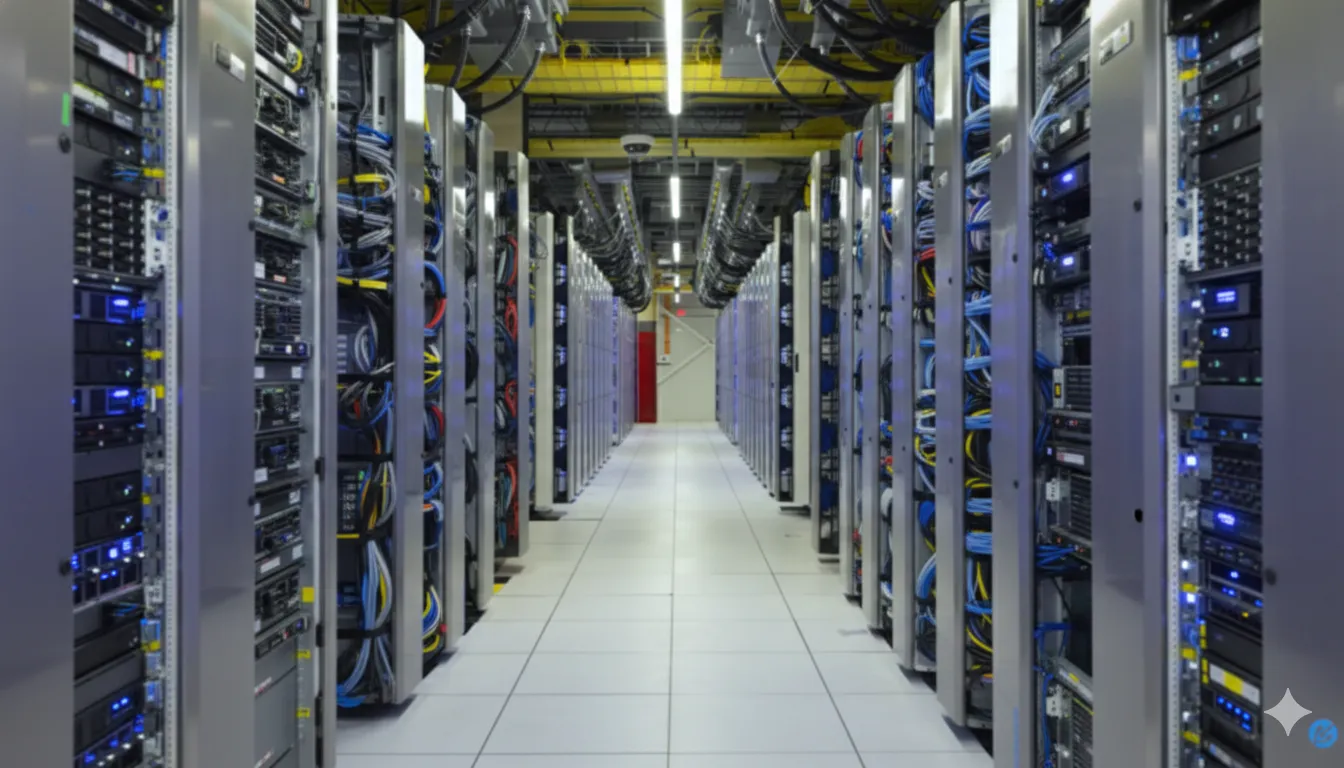
The transition from general-purpose to purpose-built is not optional. NVIDIA has deployed over 100 AI factories worldwide as of January 2025, with the number growing monthly. Every major hyperscaler, sovereign government, and forward-thinking enterprise is racing to build or retrofit facilities that can support what amounts to a completely different class of computing.
2. Rack Compute Density: Toward the Megawatt Threshold
If traditional data centers prided themselves on 10 kW per rack, AI-native architecture in 2026 operates in a different dimension entirely. Hyperscalers are currently integrating Blackwell GB300 and Vera Rubin NVL72 systems with precision densities at 120-130 kW per rack.
| Year | Platform | Per-Rack Density | GPUs per Rack | Interconnect |
|---|---|---|---|---|
| 2015 | Traditional x86 | 5 kW | N/A | 10 GbE |
| 2020 | Early GPU (A100) | 10-15 kW | 8 | HDR InfiniBand |
| 2023 | NVIDIA H100 DGX | 30-40 kW | 8 | NDR InfiniBand |
| 2025-26 | GB300 NVL72 | 132-140 kW | 72 | NVLink 5.0 (130 TB/s) |
| 2026-27 | Vera Rubin NVL72 | 120-130 kW | 72 | NVLink 6 (3.6 TB/s per GPU) |
| 2027+ | Rubin Ultra NVL576 | ~600 kW | 576 | NVLink 6 (Kyber fabric) |
Sources: NVIDIA GTC 2025, Computex 2025, Tom's Hardware, DatacenterDynamics For educational and research purposes only.
The GB300 NVL72: Setting the Standard
The NVIDIA GB300 NVL72 represents the current deployment standard for AI-native facilities. Each rack integrates 72 Blackwell Ultra GPUs interconnected via NVLink 5.0, delivering an aggregate bisection bandwidth of 130 TB/s within the rack. At 132-140 kW per rack, it demands purpose-built liquid cooling infrastructure and structural reinforcement to support its 2.5-3 ton weight.
Vera Rubin: The 2026-2027 Transition
NVIDIA's next-generation Vera Rubin platform, announced at Computex 2025, introduces the Rubin R100 GPU with HBM4 memory and NVLink 6 interconnect delivering 3.6 TB/s per GPU. The Vera Rubin NVL72 maintains a similar 120-130 kW envelope while delivering substantial performance improvements. Critically, Rubin's architecture enables training with one-quarter the number of GPUs required by Blackwell for equivalent workloads, fundamentally changing the efficiency equation.
Operational Reality
In billion-dollar GPU clusters, GPU idle time exceeding 1% translates to millions of dollars per hour in lost productivity. Tight clustering with NVLink interconnects is mandatory to minimize latency. This is why AI racks cannot simply be spread across existing facilities — the physics of interconnect latency demands density.
3. The Thermodynamic Revolution: Physics of Cooling
Air has reached its thermal limit, as our earlier HVAC shock analysis forewarned. It can no longer handle the heat flux of chips that penetrate 1,000 W/cm². AI-native design mandates the transition to liquid cooling with strict operational realities.
"The primary bottlenecks for AI scaling are no longer the availability of high-end silicon, but the skyrocketing costs of electricity and the lack of advanced liquid cooling infrastructure to support these systems at scale."
Satya Nadella, CEO — Microsoft World Economic Forum, Davos, January 2026
| Cooling Technology | PUE Range | Max Rack Density | Market Share 2025 | Status |
|---|---|---|---|---|
| Traditional Air | 1.4 - 1.8 | ~30 kW | Declining | Legacy standard |
| Direct-to-Chip (DTC) | 1.10 - 1.35 | ~200 kW | 42.85% revenue | Market leader |
| Rear-Door Heat Exchanger | 1.20 - 1.40 | ~50 kW | Growing | Retrofit-friendly |
| Single-Phase Immersion | < 1.10 | 300+ kW | Emerging | PFAS regulatory risk |
| Two-Phase Immersion | < 1.08 | 400+ kW | Niche | Operational complexity |
Sources: Markets and Markets, Grand View Research, Vertiv Data Center Cooling Reports For educational and research purposes only.
Direct-to-Chip Dominance
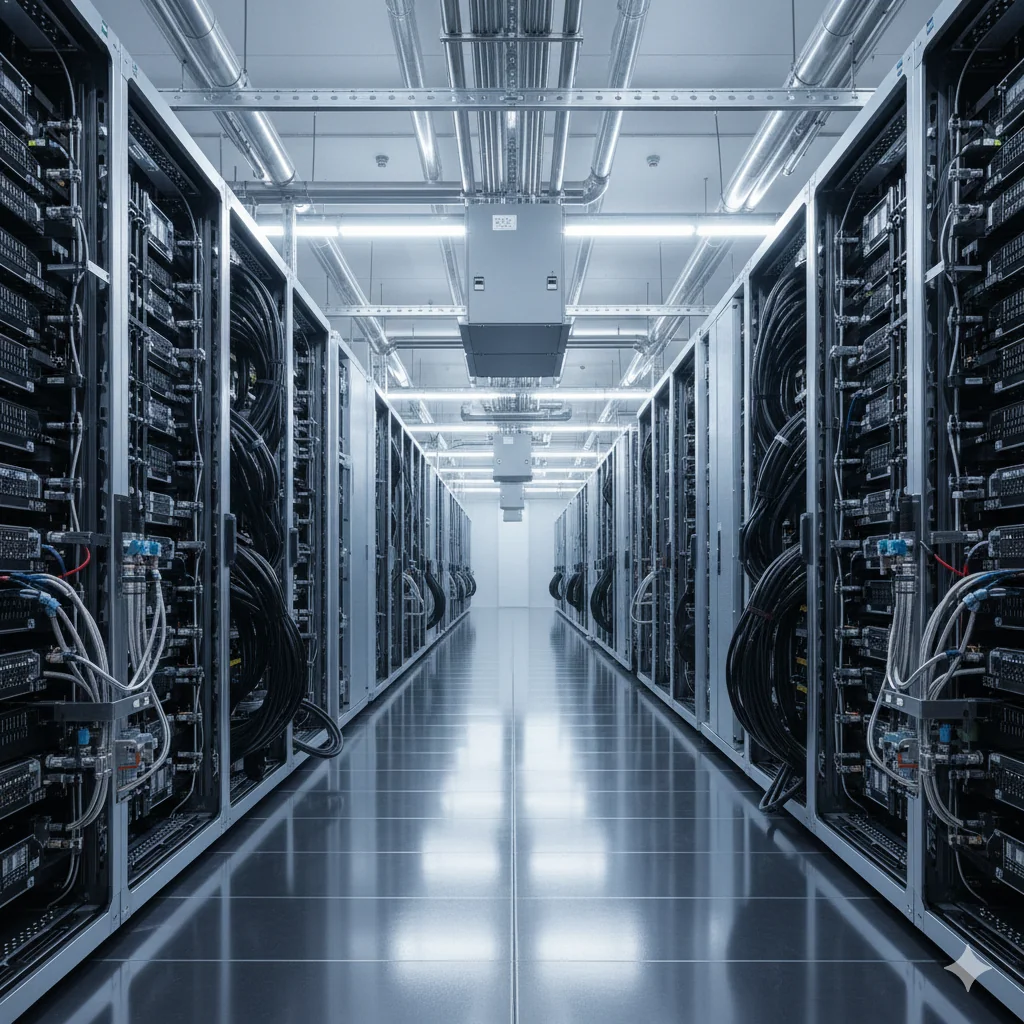
DTC cooling has emerged as the definitive winner for 2025-2026 deployments. It captured 42.85% of liquid cooling revenue in 2025 according to Markets and Markets, driven by two factors: compatibility with existing brownfield facility retrofits and significantly lower operational complexity compared to immersion cooling. Google's global fleet achieves a PUE of 1.09. AWS operates at a global average PUE of 1.15. These benchmarks are achieved primarily through DTC implementations at scale.
The PFAS Problem
Immersion cooling faces a regulatory headwind that could limit its adoption timeline. The dielectric fluids used in many immersion systems contain PFAS (per- and polyfluoroalkyl substances), a class of chemicals facing increasing regulatory scrutiny in the EU and US. While alternatives exist, the uncertainty has pushed most hyperscalers toward DTC as the safer bet for large-scale deployments.
Market Trajectory
The liquid cooling market is projected to grow from $2.84 billion in 2025 to between $21 billion and $44 billion by 2032-2035, representing a compound annual growth rate of approximately 33%. This is not speculative demand — it is the direct consequence of GPU architectures that physically cannot be air-cooled.
PUE Reality Check
Forget lab claims of PUE 1.02. Real-world hyperscale facilities in early 2026 operate in the 1.10-1.15 range with liquid cooling. The energy losses in pumps and distribution systems are an inescapable consequence of the second law of thermodynamics. Any vendor claiming sub-1.05 PUE at scale deserves scrutiny.
4. The Network War: Ultra Ethernet vs InfiniBand
AI-native data centers demand "flat" (non-blocking) networks with constant utilization above 90% to amortize the massive capital expenditure on GPU infrastructure. The battle between two networking paradigms is reshaping how clusters are built.
| Attribute | Ultra Ethernet (UEC 1.0) | InfiniBand (NDR/XDR) |
|---|---|---|
| Bandwidth | 400/800 GbE | 400/800 Gb/s |
| Latency | ~2-3 μs (improving) | <1 μs |
| Ecosystem | Open, multi-vendor | NVIDIA proprietary |
| Cost | 30-50% lower per port | Full access pricing |
| Best For | Inference scale-out, commercial clusters | Frontier training, ultra-low latency |
| RDMA Support | RoCEv2 (improving) | Native, mature |
| Congestion Control | UEC-specific (new) | Battle-tested |
Sources: Stordis Network Analysis, Ultra Ethernet Consortium, NVIDIA Networking For educational and research purposes only.
The Ultra Ethernet Consortium (UEC) launched its 1.0 specification in June 2025, bringing open Ethernet to near-InfiniBand performance levels. NVIDIA's Spectrum-X platform bridges both worlds, offering an Ethernet-based solution with AI-specific optimizations.
The industry is shifting from a singular focus on peak FLOPS toward sustained efficiency and the lowest cost-per-token. This transition favors Ultra Ethernet for the growing inference workload segment, where scale-out economics dominate and the sub-microsecond latency of InfiniBand provides diminishing returns. For frontier training runs where collective operations synchronize across thousands of GPUs, InfiniBand remains the established choice.
The Practical Split
Ultra Ethernet for inference at scale (cost-optimized, open ecosystem). InfiniBand for frontier training (latency-critical, proven at 100K+ GPU scale). Most large operators are building for both, using InfiniBand in training clusters and Ethernet in inference pools.
5. Energy Geopolitics & The $700 Billion Race
In 2026, the location of a data center is determined by access to baseload power, not proximity to users. The largest capital allocation in the history of technology is underway.
"The risk of underinvesting is dramatically worse than the risk of overinvesting. For each of these companies, if they turn out to be wrong, they will have the ability to recover. If they don't invest and get it wrong, there may not be a path forward. This AI build-out is moving 10 times faster than prior industrial revolutions."
Sundar Pichai, CEO — Alphabet/Google AI Action Summit, Paris, February 2025
| Company | 2026 CAPEX (Planned) | % Revenue | Primary AI Focus |
|---|---|---|---|
| Amazon (AWS) | ~$200B | ~28% | Custom Trainium, Inferentia chips + NVIDIA |
| Alphabet (Google) | ~$185B | ~45% | TPUv6, Gemini infrastructure |
| Microsoft | $120B+ | ~45% | Azure AI, OpenAI partnership |
| Meta | $100B+ | ~57% | Llama training, AI research |
| Total | ~$605B | ~75% tied to AI infrastructure |
Sources: IEEE Communications Society, CNBC, Company earnings reports Q4 2025 For educational and research purposes only.
Approximately 75% of this spending — roughly $450 billion — is directly tied to AI infrastructure: GPU procurement, data center construction, advanced power distribution systems, and cooling systems. The capital intensity is historically unprecedented: Meta is reinvesting 57% of its revenue into infrastructure, a ratio that would have been unthinkable in any previous technology era.
The Nuclear Question
Small Modular Reactors (SMRs) remain the long-term dream for baseload AI power, but the licensing process has kept them firmly in the future tense. The dominant power solutions for 2026 are co-location with existing legacy nuclear plants and hybrid configurations combining large-scale solar arrays with battery storage systems. Microsoft's deal with Constellation Energy to restart the Three Mile Island Unit 1 reactor exemplifies the desperation for reliable baseload power.
The Power Arms Race
Hyperscalers are becoming energy companies by necessity. The ability to secure 50-500 MW of continuous baseload power is now the single greatest barrier to entry in the AI infrastructure market. Companies that solve the power equation gain a structural competitive advantage that cannot be replicated with software alone.
6. Indonesia's Sovereign AI Ambitions
The sovereign AI movement is driving data center construction in emerging markets, with Indonesia positioning itself as Southeast Asia's AI infrastructure leader.
- BDx Indonesia launched the country's first sovereign AI data center powered by NVIDIA in December 2024, establishing a template for GPU-dense facilities in the region.
- Telkom NeutraDC Batam has deployed an 18 MW facility scalable to 54 MW, targeting both domestic and international AI workloads leveraging Batam's proximity to Singapore.
- Market projection: Indonesia's data center market is expected to grow from $0.66 billion in 2025 to $1.44 billion by 2030, a CAGR of 16.91% — part of the broader $37 billion Southeast Asian opportunity we analyzed.
- GDP impact: The Indonesian government projects a $140 billion contribution from AI to national GDP by 2030, underpinning sovereign investment mandates.
- Danantara sovereign wealth fund: has earmarked a $10 billion deployment specifically for digital infrastructure and AI capabilities.
Infrastructure Constraints
Indonesia faces two critical constraints that could slow AI infrastructure deployment. PLN (state utility) grid capacity remains limited in many target regions, with new high-voltage connections taking 12-24 months. Water stress in Java and Bali creates environmental opposition to water-intensive cooling systems. These factors are pushing developers toward modular edge deployments with independent micro-grids and air-cooled or dry-cooled solutions where liquid cooling water supply is constrained.
7. Strategic Risks: Stranded Assets & Software Efficiency
Building AI-native infrastructure is a wager with a brutally short lifecycle. The risks are real and quantifiable.
The DeepSeek Factor
In January 2025, DeepSeek released its R1 model, demonstrating comparable performance to GPT-4-class models at a fraction of the training compute cost. The reaction was immediate: NVIDIA's stock dropped 17% in a single session. The market briefly questioned whether the entire AI infrastructure buildout was overkill.
The answer, as it turned out, was no. Meta responded by increasing its 2025 AI spending to $65 billion, up from $38 billion. Jevons Paradox — the observation that efficiency improvements lead to increased total consumption — proved predictive once again. Cheaper AI inference made AI accessible to millions more users and use cases, driving exponentially more compute demand.
Hardware Depreciation
AI hardware refresh cycles are running under 5 years, and accelerating. The NVIDIA A100 (released 2020) was functionally superseded by the H100 (2022), which is now being replaced by Blackwell (2024-2025), with Vera Rubin arriving in 2026-2027. Facilities that cannot support the physical requirements of each successive generation — 2-3 ton racks, liquid cooling plumbing, reinforced floors, higher power density — become stranded assets.
The Contrarian Case
If software efficiency improvements outpace demand growth, the industry faces overcapacity risk. A 10x improvement in model efficiency, applied across all workloads, would theoretically reduce compute demand by 90%. If this happens faster than new AI use cases emerge to absorb the freed capacity, the $600B+ in infrastructure investment becomes a write-down. This is the tail risk that keeps CFOs up at night — even as they approve the next billion-dollar facility.
8. Industry Perspective: What the Giants Are Building
"What we're building is not just data center infrastructure. This is the largest industrial buildout in human history. We're building AI factories that will manufacture digital intelligence for the world."
Jensen Huang, CEO — NVIDIA CES 2025, Las Vegas
"Energy and energy infrastructure costs will be the key driver of who wins the AI race. We have a lot of GPUs, a lot of capacity, but the challenge is to put that capacity to work efficiently. Energy is the bottleneck."
Satya Nadella, CEO — Microsoft Microsoft Q1 FY2026 Earnings Call
"We're planning to bring online tens of gigawatts of capacity this decade. Meta Compute represents our commitment to building the infrastructure that will power the next generation of AI services for billions of people."
Mark Zuckerberg, CEO — Meta Meta Compute Announcement, January 2026
The colocation operators are tracking this shift directly. Equinix reported that 60% of its largest Q4 2025 deals were driven by AI workloads — a dramatic shift from the traditional enterprise hosting and cloud connectivity mix that historically dominated their order book. Digital Realty posted record results with a notable shift toward inference workload deployments, confirming that AI demand is transitioning from training-only to production inference at scale.
The Operator Shift
Traditional colocation operators face a strategic choice: invest heavily to retrofit for AI-density workloads, or cede the fastest-growing segment of the market to purpose-built competitors. Those who invest early and secure power commitments gain lasting structural advantages. Those who wait risk irrelevance as the market migrates to AI-native facilities.
9. The Verdict: Infrastructure Is the Product
In 2026, a data center no longer merely supports the business. It is the product itself. The competitive advantage has shifted from algorithms to energy access and cooling efficiency.
| Dimension | Traditional Data Center | AI Factory |
|---|---|---|
| Rack Density | 5-10 kW | 120-600 kW |
| Cooling | Air (CRAC/CRAH) | Liquid (DTC/Immersion) |
| PUE | 1.4-1.8 | 1.08-1.15 |
| Rack Weight | ~1 ton | 2-3 tons |
| Network | 10-100 GbE | 400-800G + NVLink |
| Power per Facility | 2-10 MW | 50-500 MW |
| Hardware Lifecycle | 7-10 years | <5 years |
| Primary Workload | General IT, Web, Storage | Training, Inference, HPC |
Source: Publicly available industry data and published standards. For educational and research purposes only.
The New Moat
Reliable power and efficient cooling affect the cost per token of inference. Compare those operating constraints alongside model and hardware choices when assessing a facility. Power availability, cooling performance, and operating cost directly affect the service the facility can deliver.
10. AI Factory Infrastructure Readiness Calculator
Assess whether your existing or planned data center facility can support AI-native workloads. This calculator evaluates power density readiness, cooling infrastructure adequacy, structural capacity, and estimates operational costs.
Evaluate your facility's capability to support GPU-dense AI workloads, estimate costs, and assess stranded asset risk.
All content on ResistanceZero is independent personal research derived from publicly available sources. This site does not represent any current or former employer. Terms & Disclaimer
References & Sources
- NVIDIA Blog, "AI Factories: Manufacturing Intelligence at Scale." blogs.nvidia.com
- CNBC, "Nadella says energy and infrastructure costs will decide the AI race." cnbc.com
- Fortune, "Zuckerberg announces Meta Compute: tens of gigawatts this decade." fortune.com
- Reuters, "Pichai warns of underinvestment risk at AI Action Summit." reuters.com
- Markets and Markets, "Data Center Liquid Cooling Market — Global Forecast to 2032." marketsandmarkets.com
- Vertiv, "The Impact of Liquid Cooling on Data Center PUE." vertiv.com
- Google Data Centers, "Efficiency: How we do it — PUE." google.com/datacenters
- Stordis, "Ultra Ethernet vs InfiniBand: The AI Networking Battle." stordis.com
- IEEE Communications Society, "Hyperscaler CAPEX Exceeds $600B in 2026." comsoc.org
- Introl, "Indonesia Sovereign AI Data Center — BDx NVIDIA Partnership." introl.co.id
- Data Storage Asia, "Indonesia sovereign AI report: $140B GDP contribution by 2030." datastorageasean.com
- The AI Journal, "DeepSeek and the risk to data center investment." aijournal.com
- Data Center Frontier, "DeepSeek impact on liquid cooling demand." datacenterfrontier.com
- Bisnow, "Equinix & Digital Realty report AI-driven inflection in Q4 2025." bisnow.com
- Equinix Blog, "AI Infrastructure Trends for 2025 and Beyond." blog.equinix.com
- Tom's Hardware, "NVIDIA Ships Over 100 AI Factories Worldwide." tomshardware.com
- Grand View Research, "Liquid Cooling for Data Centers Market Analysis 2025-2035." grandviewresearch.com
- Precedence Research, "Data Center Liquid Cooling Market Size to Reach $44B by 2035." precedenceresearch.com
- Boyd Corporation, "Air vs Liquid Cooling Energy Analysis for AI Data Centers." boydcorp.com
- ACEEE, "Future-Proofing AI Data Centers: Efficiency Standards & Best Practices." aceee.org
- NVIDIA, "Vera Rubin NVL72 Architecture Overview — Computex 2025." nvidia.com
- Ultra Ethernet Consortium, "UEC 1.0 Specification Release." ultraethernet.org